The Healing Journey: The Integration Process of Therapy
Updated: Feb 10

Exploring the Voids Within and Emerging Whole -
Sometimes, the journey to healing and self-understanding feels less like a path and more like an immersion—into darkness, uncertainty, and an unexplored inner ocean. Imagine, for a moment, that the therapeutic journey is a series of dives into the deep blue: an experience where every descent uncovers both fear and awe, and each return to the surface brings a little more of ourselves back into the light.
Setting the Stage: Diving into Ourselves
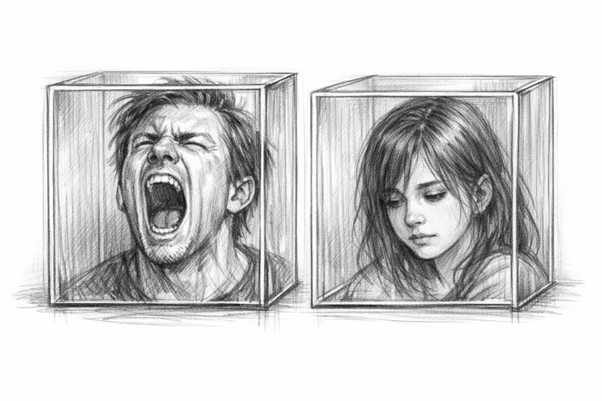
We all have voids within—spaces shaped by forgotten memories, emotional absences, or traumas that linger like shadows at the edge of our consciousness. These voids can manifest as moments when we can’t recall parts of our lives, or when we find ourselves emotionally empty, unable to draw from our own inner reserves. Sometimes, we’re acutely aware of the wounds we carry; at other times, we simply sense a deficiency in our ability to respond to life’s challenges. These experiences, whether sharp and sudden or quietly chronic, signal that part of us is adrift.
Exploring the Void: Disconnection and Loss
The initial “cut off” from ourselves often happens silently—a gradual externalisation until we become bystanders to our own lives, defined more by thoughts than by identity. For some, this stems from losing those vital connections that once oriented us. Perhaps those entrusted with our care were themselves lost, unable to offer what they never received. Whether through neglect or the subtle theft of a childhood’s security, we can find ourselves set afloat in an emotional emptiness, unsure how to navigate back.
The Healing Journey: Steps towards Integration
Embarking on the healing journey is an act of courage. It’s characterised by a search for energy and hope, a willingness to enter the void and discover what lies beneath. This journey is not just about managing resources, as if we were overseeing an internal economy, but about rediscovering presence, integration, and identity—often lost through trauma or overwhelm. The work of healing, particularly through a gestalt or integrative approach, is to bring together the split parts of ourselves: mind, emotions, and a sense of self. With the guidance of an experienced “diving partner”—a therapist, a mentor—one learns not just to survive, but to become whole.
Diving Stories as Analogy: Night Dives and Facing the Unknown
My own encounters with the sea have served as powerful metaphors for this process. I recall the anticipation of qualifying for an advanced diving licence—a challenge that included a night dive in a lagoon. As the sun set, my team and I descended into absolute darkness, clinging to each other for reassurance. Time seemed to stretch, and fear quietly crept in as visibility vanished. At the end of our ordeal, I attempted to ascend only to bump my head against an unseen obstacle—a rock formation, the legacy of years of water carving out hidden spaces beneath the surface.
In that moment, panic threatened to overwhelm me, much as fear can dominate when we delve into the darkest parts of ourselves in therapy. But, step by step, I felt my way upward, trusting in touch, presence, and the company of those who journeyed with me. When we finally surfaced, the relief was palpable—a silent acknowledgement that, together, we had navigated the unknown and emerged safely.
The Gestalt/Integrative Approach: Finding Wholeness
This experience echoes the gestalt view of healing: the journey is not about fixing a broken part, but about reclaiming the whole—integrating what was split and disowned. Entering the void, whether large or small, requires not gimmick or technique, but lived experience, empathy, and courage. A skilled therapist becomes the trusted diver, venturing alongside us, providing insight and the safety needed to face whatever lies in the depths.
Often, the first consequence of re-engaging with our emotional selves is the realisation of just how much we’ve lost—and the grief that comes with it. Yet this is not the end. With each layer of pain acknowledged, with each burden laid down, we find energy restored, resilience rebuilt, and the joy of truly living—an outcome well worth the journey.
Resolution and Growth: From Darkness to Light
Sometimes, the therapeutic process can feel like becoming stuck in a dark underwater cavern, uncertain if there’s a way out. The fear that delving deeper will make things worse is real, but with steady guidance and growing self-compassion, the darkness gradually gives way to understanding and integration. The night dive, less glamorous than the first, proved to be the most instructive. It reminded me that every journey into unknown territory, inner or outer, demands a different approach. No two experiences are the same, but each successful navigation strengthens our capacity to meet life’s challenges head-on.
With integration comes the ability to respond to adversity with efficacy, to build secure relationships, and to find comfort in our own company. Loneliness becomes a passing visitor rather than a constant companion, and we learn to direct and resolve our emotions—gaining access, finally, to the inner resources that were always ours.
Conclusion: Returning, Restored
As the ancient words remind us, “So, I will restore to you the years the locust has eaten.” Healing is not about erasing the void but learning to embrace it, explore it, and allow it to teach us about who we are. The journey is daunting, the depths sometimes frightening, but with courage, support, and a willingness to dive in, we surface not only intact but more whole than ever before. The real reward is the discovery that the source of life we sought was within us all along.


Comments